Loading book details…
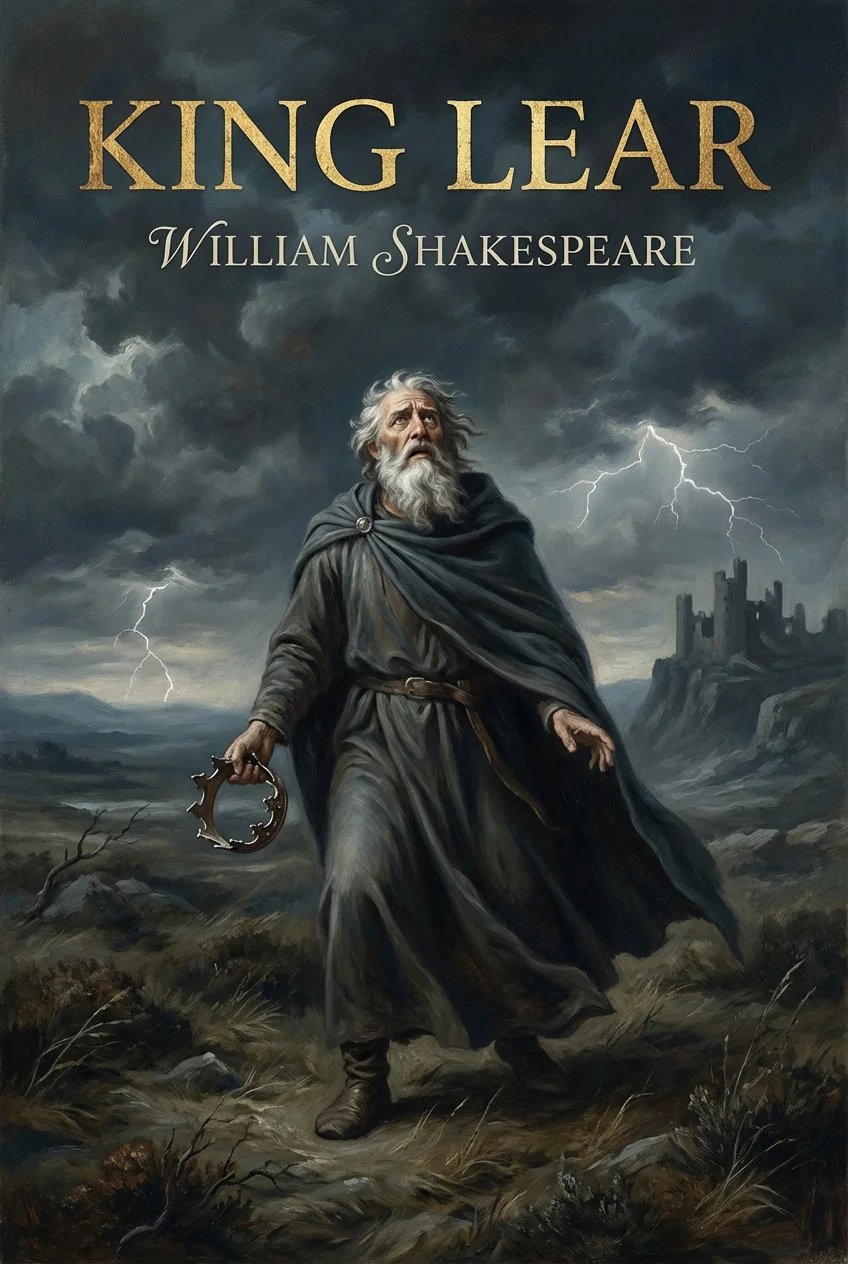
William Shakespeare’s King Lear is a powerful tragedy about a weary ruler who decides to divide his kingdom among his children, setting off a struggle over loyalty, power, and identity. As family bonds fracture and trust proves fragile, the play explores what it means to lead, to love, and to see clearly—both in others and in oneself. You should read it for its unforgettable language, razor-sharp insight into human nature, and emotional intensity. It’s a timeless story that feels startlingly modern in its questions about authority, justice, and compassion.
// Spoiler view
What happens in the book
Contains plot details
King Lear, an aging monarch, decides to divide his kingdom among his three daughters after demanding they profess their love. Goneril and Regan deliver elaborate flatteries, while Cordelia—his favorite—offers only honest restraint. Enraged, Lear banishes Cordelia and disowns her. Meanwhile, Edmund, Gloucester's illegitimate son, schemes against his legitimate brother Edgar through forged letters. As Lear's elder daughters conspire to strip him of power and retinue, he descends into madness during a violent storm. Edmund rises through betrayal, ultimately blinding his father Gloucester. When Cordelia returns with French forces to rescue her father, the play ends in devastation—Lear and Cordelia are captured, Edmund's treachery exposed, and Lear dies holding Cordelia's corpse. Albany assumes power as survivors face an uncertain future.
// Chapter map
Chapter by chapter
// Related